Wiener Neustadt is the cradle of Austrian aviation. It was where the first hangars were built in 1909, where the famous Etrich Taubetook off on its maiden flight, and where aircraft, engines, and innovations that gained significance far beyond Austria were developed. Whether it was Ferdinand Porsche’s first aircraft engine, Warchalowski’s designs, or the series production of the Messerschmitt Bf 109, the city was a hotbed of technology, courage, and pioneering spirit.
The Aviaticum tells this eventful story — and brings it to life. Founded in 1999, exactly 90 years after the first workshops were built at Ost Airport, it is a place where the past and present of aviation meet. This was made possible by the efforts of individuals such as Toni Kahlbacher, himself a pioneer and world record-breaking pilot, and through close cooperation between the city, federal state and committed partners.
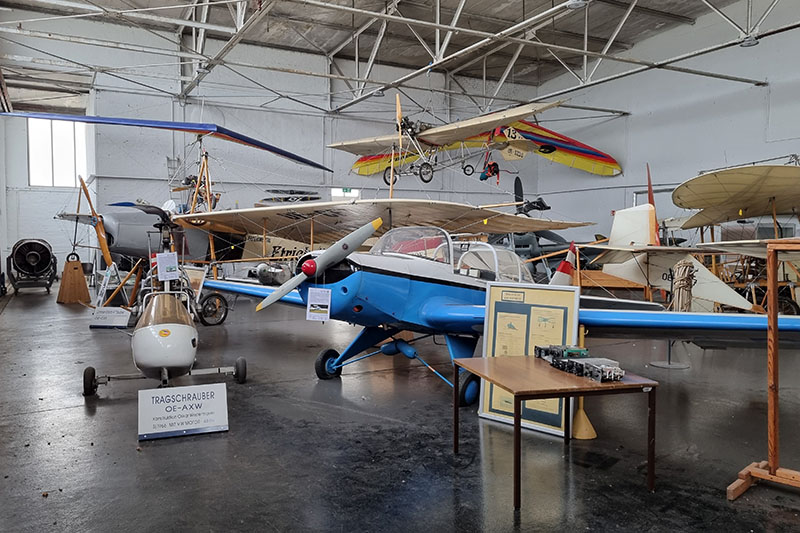
The museum not only displays historic aircraft, engines, and uniforms, but also unique restorations and rarities that are rare worldwide. They tell of records, of technology that was ahead of its time, and of people who dedicated themselves to the dream of flying.
But the story does not end in the museum: Right next door, modern companies such as Diamond Aircraft are developing new aircraft, sports planes and rescue helicopters take off from the airfield every day, and numerous flying clubs keep the enthusiasm for aviation alive. Wiener Neustadt is thus still a center of flying in Austria today.
The Aviaticum bridges the gap between yesterday and today: From the first aviation pioneers to high-tech aviation. Visitors to the museum can feel the fascination that has driven people for over 100 years — the longing to experience the world from a bird’s eye view.
The Etrich Taube – the beginning of a new era
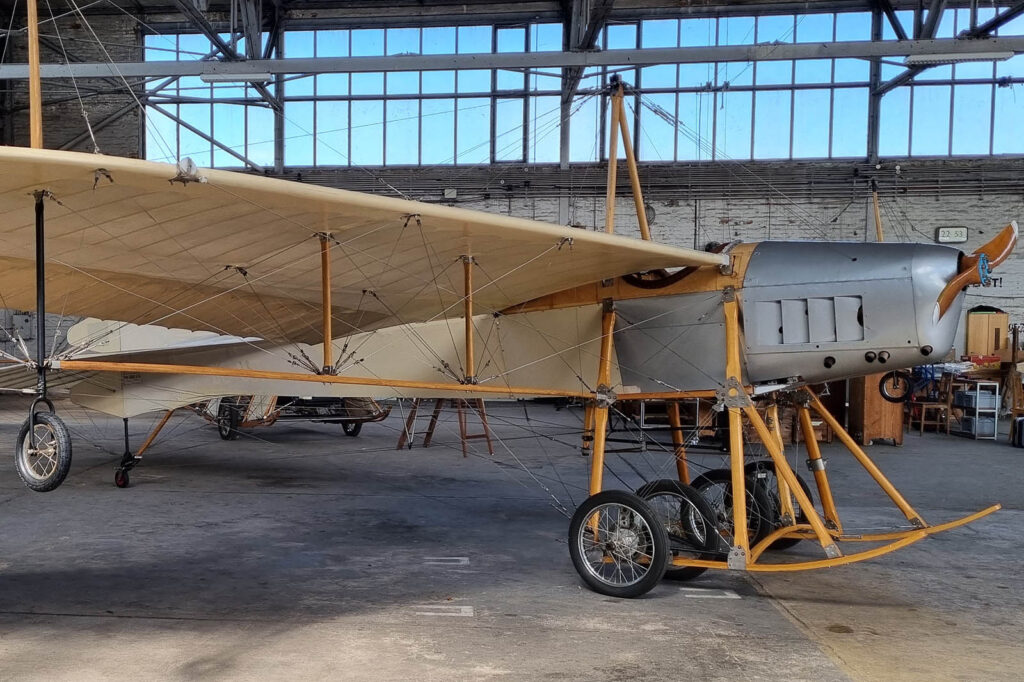
Here, on the first airfield of the monarchy, the Etrich Taube took off for the first time in 1909. In the fall of 1909, it made history: It was the very first military aircraft of the Austro-Hungarian monarchy – robustly built so that it could even land on freshly plowed fields. Its shape was modeled on a flying seed, which allowed it to hover stably in the air: It flew straight ahead without the pilot having to constantly intervene. A revolution for that time.
Developed by Igo Etrich, the Taube was the first aircraft with an official designation – the beginning of a whole generation. Even the early models showed how closely technology and nature can be linked. But as romantic as the name sounds, the reality of military life was harsh: Pilots still had to throw bombs out of the cockpit by hand.
The Militärtaube Typ F, as seen in the Aviaticum, is still theoretically considered airworthy today – and is still approved for flight. A piece of living history that conveys the spirit of the dawn of aviation and brings the pioneering days of flying to life in an impressive way. Because it is not just there – it is exactly where Austrian aviation began. The Etrich Taube at the Aviaticum combines historical grounds, early flight attempts, and lively museum work to create an emotional experience that touches the heart and memory.
The Etrich Taube: The dawn of a new era (Credit: Aviaticum)
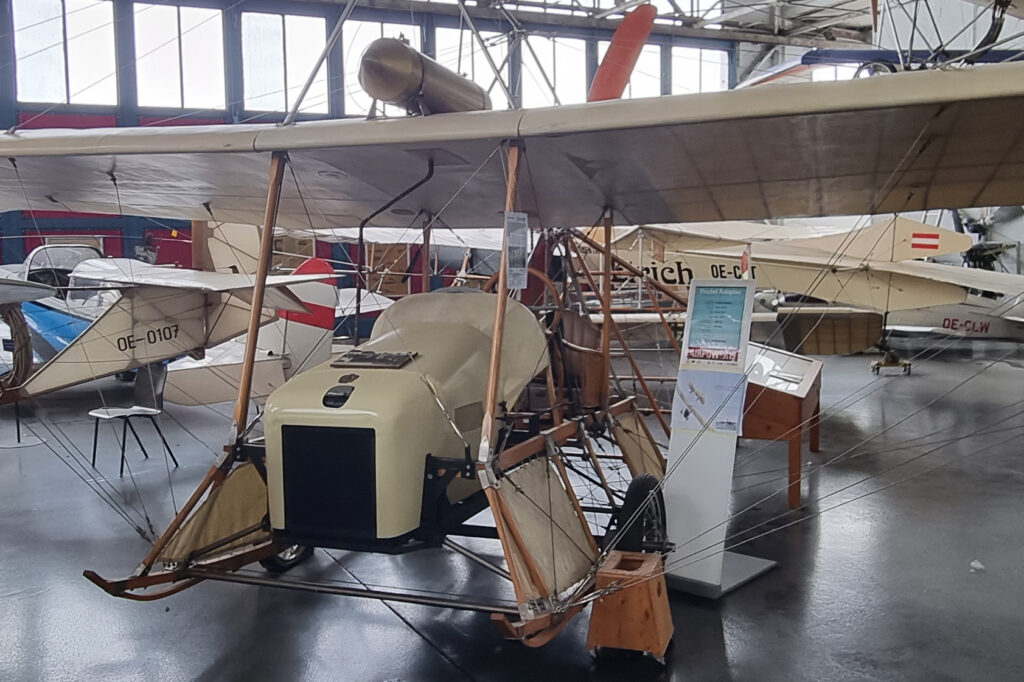
The Pischof Autoplan - Credit: Aviaticum
The Pischof Autoplan – when cars meet airplanes
In spring 1910, Alfred Ritter von Pischof undertook an extraordinary experiment: He built the Autoplan – an airplane based on an Austro-Daimler engine. Because the first aircraft engines were still unreliable, he decided to use a car engine – even the clutch was retained.
The machine actually flew, making headlines in the process. Every successful takeoff was a minor miracle, every flight a sensation that made it into the newspapers. Emperor Franz Josef saw the Autoplan in person, but did not take the development seriously – railways and trains were too important at that time.
The Autoplan was more than just a technical curiosity: It showed how much pioneering spirit, courage, and improvisation went into the early days of aviation. People used whatever was available — whether car or airplane parts — and landed wherever there was space: On fields, meadows, or improvised airfields, often with skids instead of wheels.
Particularly noteworthy: The Autoplan already offered space for two people – a small revolution, because until then most flying machines were single-seaters. Later came military use: The first flying arrows and hand grenades were dropped from the air.
Today, the Pischof Autoplan is a fascinating testimony to how aviation began in Austria – and how the fusion of automobile and aircraft gave rise to a piece of technological history.
So close to the sky – Josef Starkbaum’s world records
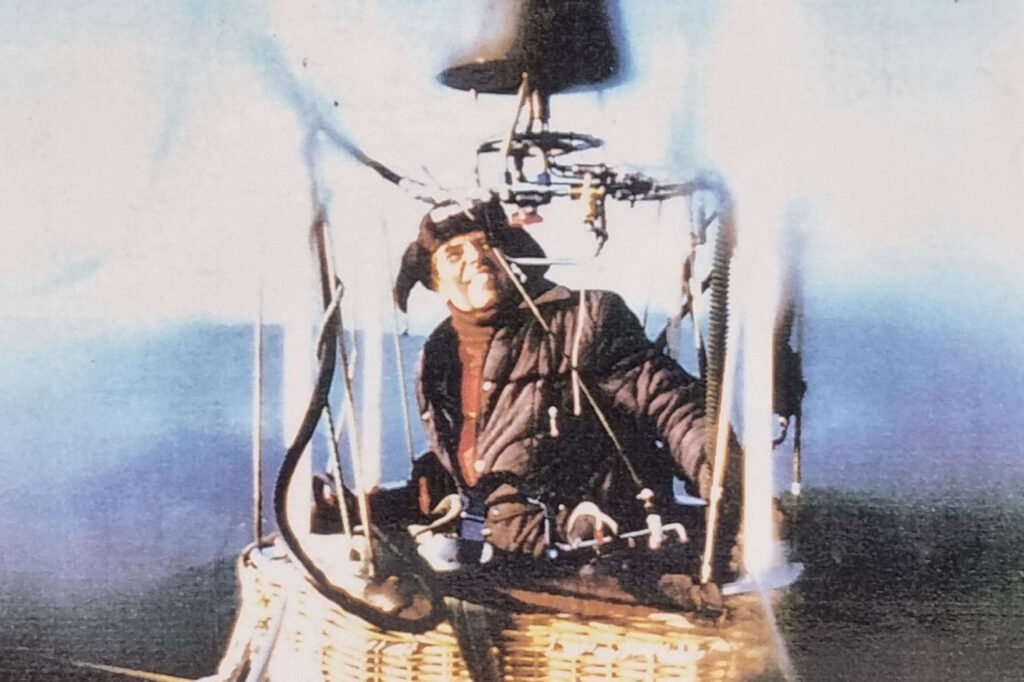
In 1989, Austrian ballooning pioneer Josef Starkbaum made aviation history: At an altitude of 15,011 meters, he set a world record that remains unbroken to this day. This extraordinary moment in aviation can be experienced up close at the Aviaticum – the original balloon basket with its burner can be seen in the museum, bringing the record-breaking flight to life.
But Starkbaum didn’t just achieve top performances in terms of altitude: He won the prestigious Coup Gordon-Bennett, the toughest and most renowned long-distance competition for balloonists, three times – the first person ever to do so.
These successes made Josef Starkbaum a legend in ballooning. At the Aviaticum, visitors can discover his traces and feel the fascination that drove him: The desire to overcome boundaries and get a little closer to the sky.
Living technology – engines that tell a story
At the Aviaticum, aircraft engines are not just exhibits – they look as if they are ready for takeoff. Many have been exemplarily restored over many years of work: With all their cables, ignition plugs, and moving parts. When you turn them, everything runs smoothly – giving the impression that you are standing in front of a built-in, functioning engine.
Particularly impressive is the DB 610 twin engine, the first series-produced jet engine of its time. Two engines that were used in a Messerschmitt Bf 109 – in flight, they could even be switched on or off individually if one engine failed. Such models are hard to find anywhere in the world – but at the Aviaticum, they are right in front of the visitors’ eyes.
Josef Starkbaum was Austria's most successful balloonist and multiple world record holder (Credit: Aviaticum)
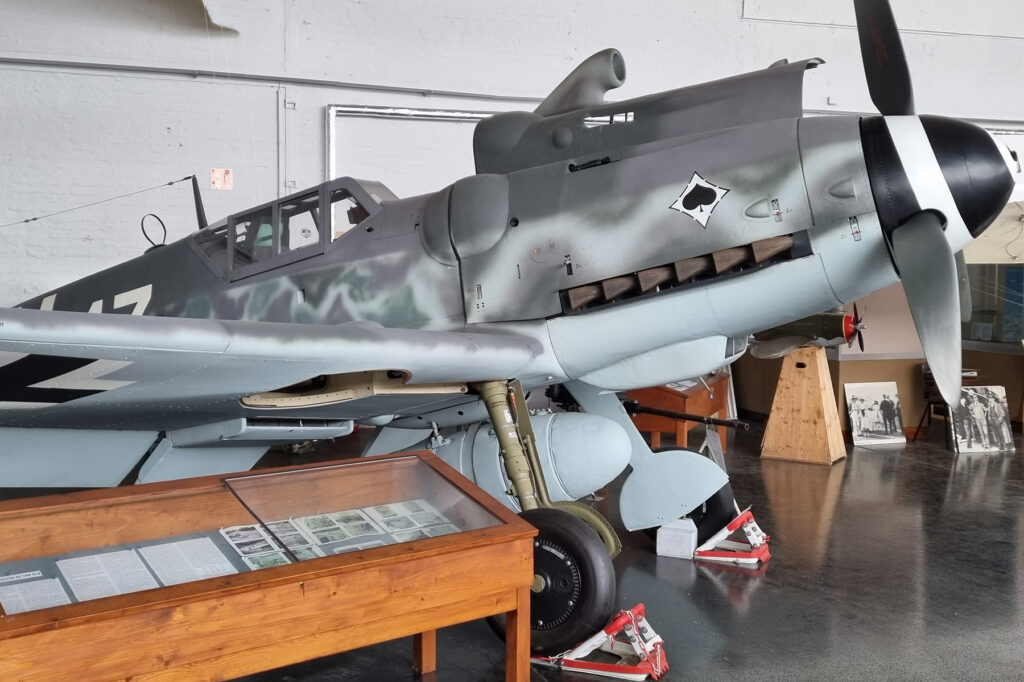
Messerschmitt Me 109 - Credit: Aviaticum
The Messerschmitt Me 109 – a legend from Wiener Neustadt
Between 1938 and 1945, around a third of all Messerschmitt Me 109s – one of the most widely produced fighter planes of World War II – were built at the Wiener Neustädter Flugzeugwerke aircraft factory. The history of this aircraft is closely linked to the city.
Today, the Aviaticum houses a Me 109 G-6, the last development stage of this type. It was reconstructed from several original aircraft – with parts that were collected from all over the world.
The result is unique: An aircraft made entirely from original parts, including the original radio equipment. This level of authenticity is extremely rare worldwide – and makes the Me 109 at the Aviaticum one of the most beautiful aircraft of its type still in existence.
Behind this rarity lies the lifelong passion of engineer Kurt Steiner, who spent over 40 years collecting and restoring parts. Thanks to his tireless efforts, visitors today can marvel at one of the most impressive Me 109s ever built – a piece of aviation history that would otherwise have been lost. After World War II, most Messerschmitts were destroyed or scrapped.
Only a few examples have survived at all – which makes it all the more valuable to be able to admire this aircraft in its original condition today.
Pioneers of the skies: Women who shaped aviation history
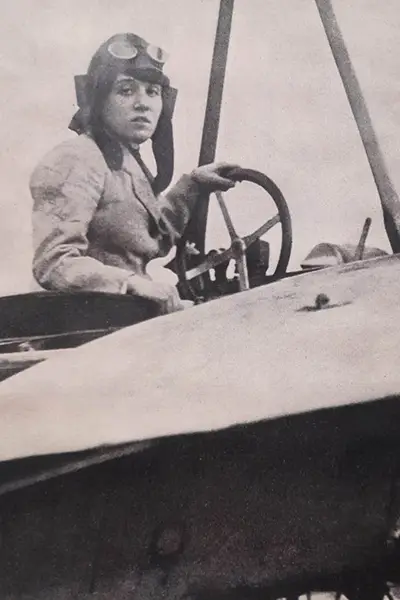
Milli Beese was the first woman in Germany to obtain a pilot's license.
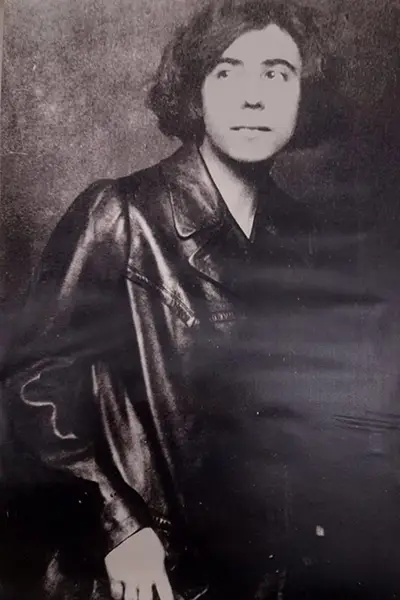
Lilly Steinschneider, one of the first female pilots in the Danube Monarchy
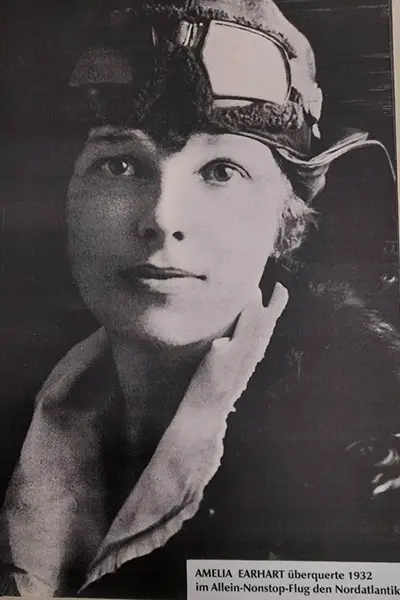
The American aviation pioneer Amelia Earhart
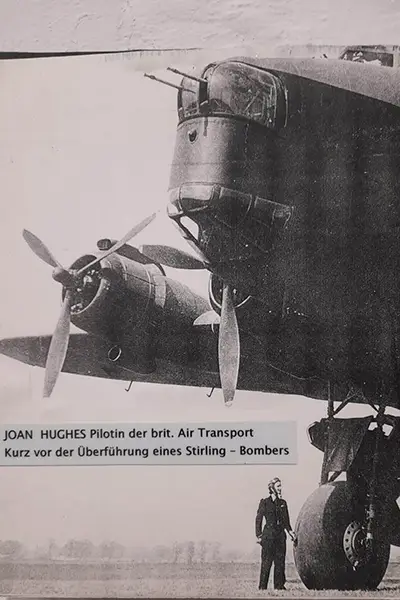
Joan Hughes: Britain's youngest female pilot
Women have actively advanced aviation history — they were pilots, designers, teachers, and record holders, often against massive opposition in a male-dominated world. Melli Beese, for example, was the first woman in Germany to obtain a pilot’s license in 1911 and subsequently founded her own flight school.
Lilly Steinschneider, one of the first female pilots in the former Danube Monarchy, quickly became famous with her license and public flights, and in 1913 she even won a speed competition – an important visible sign at the time that skill is not bound to gender roles. Amelia Earhart made history in 1932 when she became the first woman to fly solo across the Atlantic – a milestone that gave women in technical professions a boost worldwide.
In 1935, at the age of 17, British pilot Joan Hughes became the youngest pilot in Great Britain. In 1940, she became the youngest female pilot for the British Air Transport Auxiliary during World War II. Hughes became a senior pilot and was the only woman qualified to teach all types of military aircraft in service at the time. Beate Uhse was one of the few female aerobatic and stunt pilots in Germany in the 1930s and flew transfer flights during the war.
The Aviaticum honors these achievements in the exhibition with a large number of photographs and tells their stories – as proof of how much progress depends on courage, precision, and perseverance. In addition, a look at these biographies shows how closely technical progress and social change are linked: Every competition won, every license obtained, and every public appearance opened up new opportunities – also for the next generation. Many of these women became role models because they made clear that precision, risk awareness, and innovative spirit are not a question of gender.
Beate Uhse, who later became an entrepreneur, flew transport flights during the war (Credit: Aviaticum)