About us
The origins of our aviation museum
The roots of the Aviaticum date back to 1983, when pioneer and world record-breaking pilot Toni Kahlbacher teamed up with Hofrat DI Reinhard Keimel to found the “Austrian Gliding Museum Hundsheim–Spitzerberg” association. Their goal was clear: To preserve and document the history of Austrian aviation and bring it to life for future generations. Even in this early phase, artefacts were collected, contemporary witnesses interviewed and initial exhibition concepts developed – driven by a great deal of idealism and voluntary commitment.
After several attempts and failed location plans, the project finally found a new, suitable home in Wiener Neustadt. Here, vision and support came together: In close cooperation between the city, the federal state of Lower Austria, Diamond Aircraft Industries, and the specially founded private foundation, the idea for the aviation museum became a reality. In addition to the content-related work—viewing, preservation, and curation of the collection items—the focus was also on how to not only show aviation history, but also tell its story: In a vivid way and with a strong reference to the historic location of Wiener Neustadt.
On June 3, 1999, exactly 90 years after the first hangars were built at Flugplatz Ost, the Aviaticum was opened. Since then, it has been a lively place where research, education, and enthusiasm for technology come together—from the temporary airfield of the pioneering era to the great successes of Austrian aviation history. The unique artifacts make it a meeting place for everyone who wants to understand and experience aviation.
Aviaticum & Wiener Neustadt—Where aviation history began
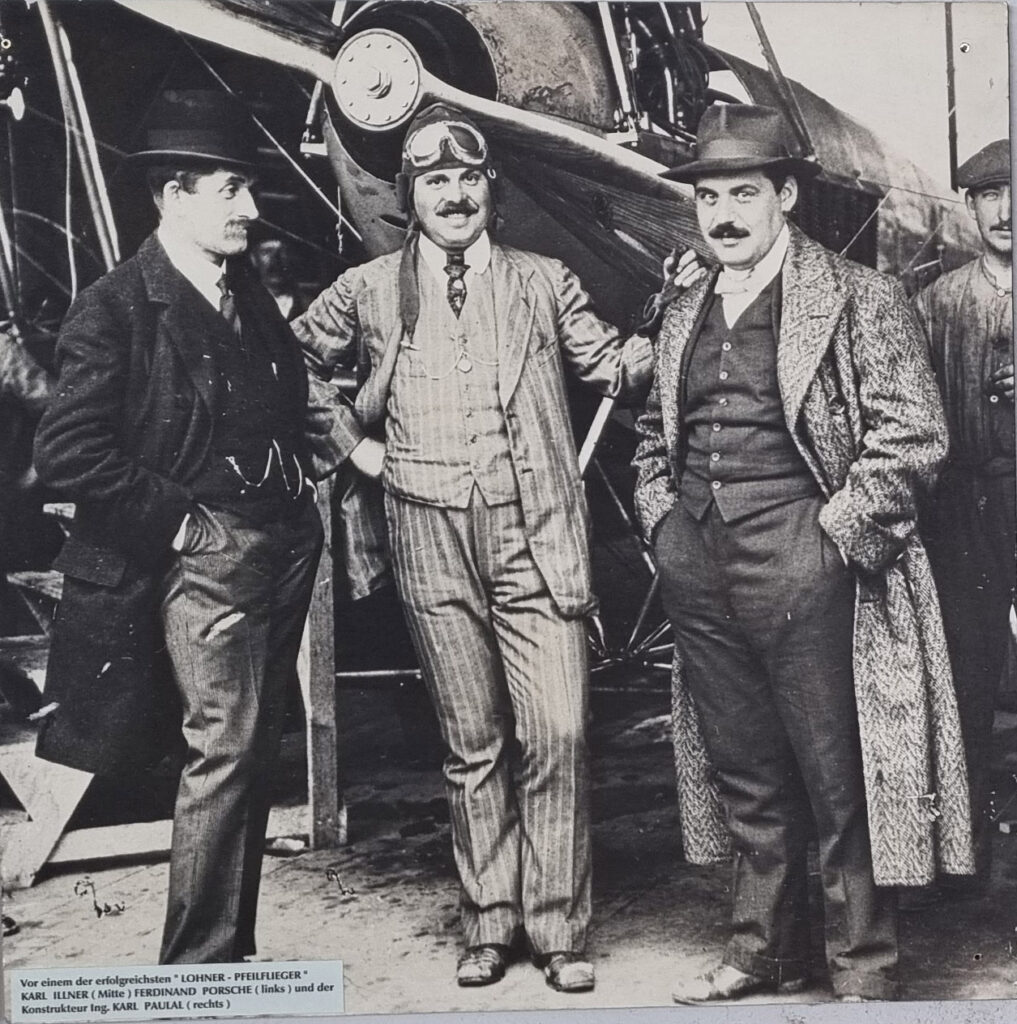
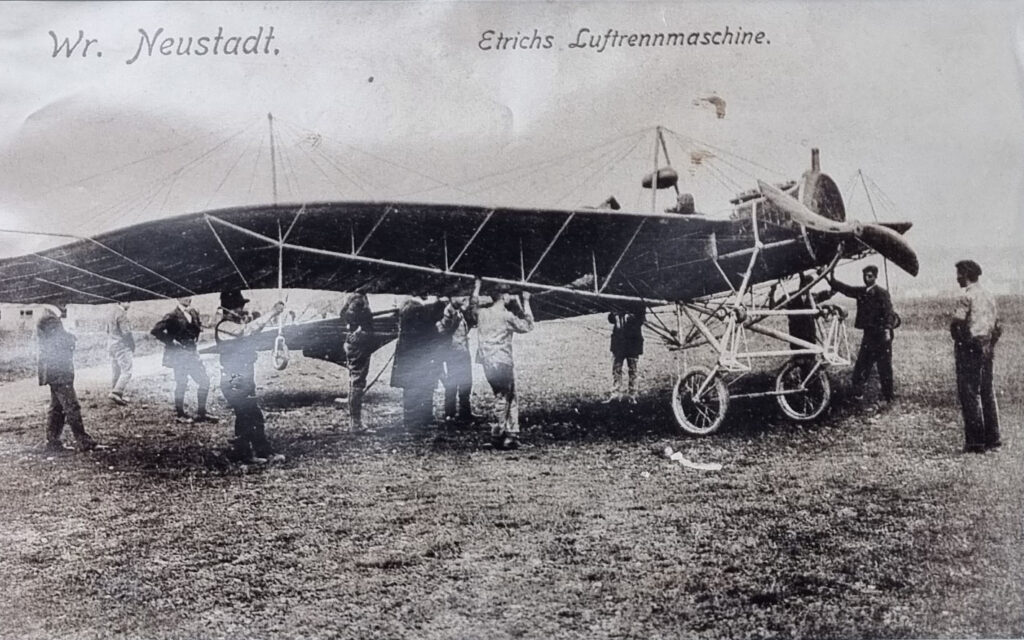
The Aviaticum is inseparably linked to the rich aviation history of Wiener Neustadt. Austria’s first airfield was established here as early as 1909—an experimental site where visionaries such as Igo Etrich tested their first motorized aircraft. The legendary Etrich Taube became the model for an entire generation of designs and marked the transition from venture to engineering systematics. Shortly afterwards, Ferdinand Porsche developed his first aircraft engine at Austro-Daimler, and designers such as Pischof, Warchalowski, and Schmiedl saw their ideas rise into the skies above Wiener Neustadt.
The founding of the Austrian Aircraft Factory (ÖFFAG) in 1915 marked the beginning of a new era in industrial aviation: Military aircraft, flying boats, and early helicopter prototypes were developed in Wiener Neustadt. The 1930s brought further innovative designs, before the Neustädter Flugzeugwerke became the production site for the famous Messerschmitt Me 109 during the Second World War – a chapter that reflects both technical mastery and the ambivalence of the time.
Even after the war, Wiener Neustadt remained a center of aviation development. Simmering-Graz-Pauker AG worked here on the Meindl 222 cabin aircraft; from the 1980s onwards, HOAC-Austria and later Diamond Aircraft continued the tradition of the location and brought it into the present. Today, modern light aircraft such as the Super Dimona, Katana, and Diamond Star are built in Wiener Neustadt. These aircraft are in use worldwide and visibly demonstrate the combination of pioneering spirit and high-tech.
With the opening of the Aviaticum in 1999 – exactly nine decades after the first hangars were built at Ost Airport – this tradition was given a visible monument. The museum bridges the gap between the daring beginnings, industrial development, and aviation today. It makes it clear why Wiener Neustadt remains a special place in Austrian aviation to this day: Here, the past remains alive, and the present becomes understandable.
Step into the history of Austrian aviation – where courageous pioneers laid the foundation for today’s technologies. From the first airfield to ingenious designs such as the Etrich Taube to modern light aircraft innovation: Our exhibition bridges the gap between the beginnings of aviation and today’s high-tech aviation – vividly, touchingly, and within reach.